Wednesday, February 24, 2010

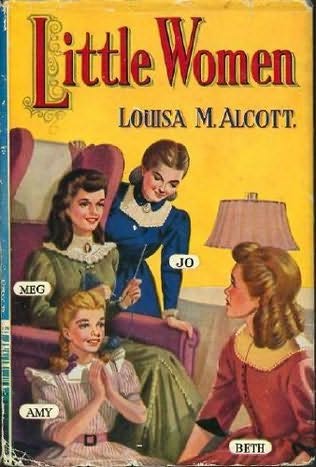
Little Women


Title:
Little Women
Author: Louisa May Alcott
Genre: Classic
Pages (words): 464 (185,716)
Readability: 9.2
Rating (out of 5 stars): ***
Reviewed by: Ben
Description: Not sure this one needs much of a description. Little Women is the classic story about four girls coming of age in a little New England town. Together, they learn tough lessons about life and what it truly means, with much guidance from their loving mother.
Thoughts: I didn't expect to really love this book, since I'm not really the target audience. And, overall, it was about what I expected: entertaining, good plot, lots of great morals, but just not really intriguing for me. I think the issue was that there wasn't really a character that I connected to, and since I already knew the basic story there just wasn't much that captured my attention. I do have to say that the writing was better than I expected, which made the book pretty enjoyable. All in all, I'm glad that I read it (especially with Alcott's home just a few miles from our house!), and I'd definitely recommend it to everyone.
Disclaimer: Pretty tame book overall. :)

Tuesday, January 05, 2010

2008-2009 Books in Review

It has been two years since my last "Books in Review" post, so I think it's time for another update. I read 24 books in 2008-2009, so this post will give my picks of the best books in that group. I'll also give some numbers that summarize my reading habits, but I'll save that for the end of the post because it's probably more interesting to me than to anyone else.

My top three books from the past two years are:

East of Eden (Classic), How Green Was My Valley (Classic), and The Book Thief (Modern)

Not surprisingly, these are the only three books that I gave 5 stars to out of the 24 I read over the past two years. Of course, they are highly recommended! If you're wondering, my top three picks from two years ago were My Antonia, My Name is Asher Lev, and These Is My Words.

In addition to the above three books, I also wanted to throw out a few honorable mentions (organized by genre):

Memoir: Angela's Ashes
Mystery: The Moonstone
Non-fiction: Joseph Smith: Rough Stone Rolling
Non-fiction: Nudge: Improving Decisions about Health, Wealth, and Happiness

What was the worst book I read in the past two years? Don Quixote. In retrospect, I can't believe that I suffered through 29 CDs (415,800 words!) of that book. No one part of Don Quixote was that bad, and some parts I really enjoyed, but it should have been 1/5th of the length. It just never ended. Not worth the effort.

Now, for the more numbers-oriented, here are some summary statistics of the 24 books. Keep in mind that I was only able to get number of words and reading grade level for 14 of the 24 books (I get both numbers through Amazon's "Text Stats" feature, which isn't available for all books), so it's a small sample:

Average Length, pages: 410.3
Average Length, words: 138,457
Average Reading Grade Level: 7.9
Average Rating: 3.7 stars
Average Rating by genre:
Classics (7 books): 3.8 stars
Memoirs (3 books): 3.7 stars
Modern (4 books): 3.8 stars
Mystery (1 book): 4.5 stars
Non-fiction (8 books): 3.6 stars
Young Adult (1 book): 3.5 stars

I was also curious to see how these stats look when I combine all of the books that I've read since 2006. When I combine these 24 books with the 31 books from my last "Books in Review" post, the stats look like this:

Average Length, pages: 370.3
Average Length, words: 108,581
Average Reading Grade Level: 7.5
Average Rating: 3.6 stars
Average Rating by genre:
Classics (15 books): 4.1 stars
Fantasy (5 books): 3.3 stars
Memoirs (5 books): 3.4 stars
Modern (8 books): 4.0 stars
Muckraker (1 book): 4.0 stars
Mystery (5 books): 3.0 stars
Non-fiction (13 books): 3.5 stars
Philosophy (1 book): 2.5 stars
Young Adult (2 books): 3.5 stars

So, it looks like I prefer classics and modern fiction to most other genres. I was surprised to see that my non-fiction average rating is only 3.5 stars, since I think I really enjoy most of the non-fiction books that I read. I guess I just like the fiction books better...

Lastly, I was also interested in whether I tend to like longer or shorter books, or books that are easier or harder to read. Here are some simple correlations:

Correlation of:
Pages with rating: 0.154
Words with rating: 0.077
Readability with rating: -0.103

Based on these numbers, I tend to like longer books slightly more than shorter ones, although when I use the number of words in the book to measure the length the relationship isn't as strong. I also tend to rate hard-to-read books a bit lower. I should note, however, that Don Quixote is a major outlier that skews these correlations because it is so long and also was the most hard-to-read book I've read, with a reading grade level of 15.8. Combine that with the fact that I gave Don Quixote only 2.5 stars, it can mess things up. If I take Don Quixote out, the numbers are,

Correlation of:
Pages with rating: 0.263
Words with rating: 0.260
Readability with rating: 0.012

Now the correlation of length with rating is quite a bit stronger, while the correlation of readability with rating is essentially zero. These numbers are probably more reflective of my true preferences.

Finally, here are the books that I've got on the docket, so this is what you've got to look forward to, if you're interested:
Little Women (about 2/3 done)
A Tree Grows in Brooklyn
The Path Between the Seas

Happy reading!

Wednesday, December 23, 2009

The Witch of Blackbird Pond


Title:
The Witch of Blackbird Pond
Author: Elizabeth George Speare
Genre: Young Adult Fiction
Pages (words): 256 (60,212)
Readability: 5.3
Rating (out of 5 stars): *** 1/2
Reviewed by: Ben
Description: In 1687, Catherine Tyler leaves her home in Barbados to live with her aunt and uncle in rural Connecticut, where she struggles to assimilate in to the strict Puritan community. She learns how to cope with her new situation by associating with another outcast of the Puritan society, an old Quaker women named Hannah. Together, they learn to strike a balance between doing what society expects, and doing what they know is right.
Thoughts: It took me a while to get in to this book, but by the end I really enjoyed it. It really does a great job of demonstrating how prejudice can creep up and the terrible consequences that can result. My only complaint would be that everything gets tied up too neatly at the end, but it's a young adult book so I kind of expected that. If you're in the mood for a quick, easy read (or if you're about 12 years old or so!), you should check this book out.
Disclaimer: None.

Thursday, November 26, 2009

A Connecticut Yankee in King Arthur's Court


Title:
A Connecticut Yankee in King Arthur's Court
Author: Mark Twain
Genre: Classic
Pages (words): 474 (N/A)
Readability: N/A
Rating (out of 5 stars): ***
Reviewed by: Ben
Description: Hank Morgan, a Yankee living in Connecticut in the late 19th century, gets transported back 13 centuries when he is hit on the head, ending up in 6th century England. He soon finds himself right in Camelot, complete with King Arthur and the Knights of the Round Table. Being a resourceful Yank, he wastes no time in using some common sense and 13 centuries' worth of knowledge to establish himself as a powerful magician and as the King's right-hand man. With his influence, he constructs some 19th-century amenities, including electricity and the telephone. But when he tries to make things better for the commoners, he meets with some serious opposition.
Thoughts: As will all Mark Twain books, A Connecticut Yankee is an enjoyable book. Twain has a great voice in his writing that is a pleasure to read. But beyond that, I can't say that I loved this book. It was entertaining and it brought out some interesting points (e.g. religion can be as bad as slavery), but much of it seemed a bit forced, like the book was simply a pretense for Twain to get out a lot of pent-up anger about society. The plot seemed like it was just draped over Twain's checklist of things that could be better about society. I don't mind an author writing books with a message in mind--in fact, I prefer it--but there are other Twain books that get his ideals across better than A Connecticut Yankee. Overall, if you're considering reading this book, my advice wouldn't be, "Don't read it," it would just be, "Don't start here." The Prince and the Pauper covers many of the same ideas and was better than this one, and of course Huckleberry Finn and Tom Sawyer are both incredible Twain books.
Disclaimer: None.

Sunday, November 15, 2009

The Book Thief


Title:
The Book Thief
Author: Markus Zusak
Genre: Modern Fiction (set in WWII)
Pages (words): 576 (N/A)
Readability: N/A
Rating (out of 5 stars): *****
Reviewed by: Ben
Description: At 9 years old, Liesel's mother can no longer care for her, and she is sent to a foster home. The Book Thief tells about her coming of age in Nazi Germany: how she grows to love her foster parents, how she begins to understand prejudices, and how she learns about the power of words to do both good and evil.
Thoughts: For me, this book had it all. First, I thought the writing was fantastic. Zusak has Death narrate the story, which is an interesting and very effective way to convey the story. His descriptions are incredibly vivid and fresh, and several parts of the story were really quite funny, although the book itself isn't. Second, the plot was great. I love that the book is not about a Jew in Nazi Germany, or the allied forces in Nazi Germany. It is about a German girl in Nazi Germany. I have often wondered how so many Germans came to follow Hitler when Hitler was so obviously insane and amoral. I think The Book Thief sheds some light on that question, with the answer being that it didn't take many people to bully the rest into obedience. Anyway, the perspective of the book was interesting to me, and really helped me see a little better the difficulties of the German people under the Nazis. Finally, The Book Thief made me want to be a better person, which is what I'm really looking for in a lot of books. And I think that Zusak pulls that off without being preachy or even too idealistic. The characters are real and they make mistakes, but by the end you're really pulling for them because you can see what makes them good. Put all of that together, and you've got a 5-star book. Highly recommended.
Disclaimer: There is some blood and gore, but this book is pretty clean. There are a lot of German swear words, which didn't bother me because I don't speak German. A few of them get translated in to English, but I didn't think it was too bad.

P.S. A huge thanks to Christina for giving us this book!!

Sunday, October 04, 2009

In Fed We Trust


Title:
In Fed We Trust: Ben Bernanke's War on the Great Panic
Author: David Wessel
Genre: Financial Non-fiction
Pages (words): 336 (N/A)
Readability: N/A
Rating (out of 5 stars): ***1/2
Reviewed by: Ben
Description: A narrative of the steps the Fed and the Treasury took to (attempt) to stem the tide of the greatest financial crisis since the Great Depression. Wessel gives the inside scoop on just what was happening inside the Fed as many of these major decisions were being made, and the rationale behind them.
Thoughts: I was surprised at how good this book was. The crisis isn't even over, and Wessel has really put together an impressive account of many of the major events that took place, include interviews with many key people which help give a larger understanding of what was going on behind closed doors while the financial system teetered on the brink. I think it is a pretty fair account as well; he's not overly critical but doesn't heap praise on the main actors either. In the end, Bernanke and Geithner come out looking pretty good, and, given the circumstances, I think they did as well as anyone could have expected them to. If anyone is looking for a non-technical description of just what went wrong over the past two years, and what the government (especially the Fed) did to try to stop it, this is the book to read.
Disclaimer: None.

D-Day


Title:
D-Day: June 6, 1944: The Climactic Battle of World War II
Author: Stephen E. Ambrose
Genre: History
Pages (words): 656 (218,581)
Readability: 8.8
Rating (out of 5 stars): ****
Reviewed by: Ben
Description: A blow-by-blow description of the events that occurred on D-Day.
Thoughts: For a long time I've felt like I knew much less about WWII than I should, which is why I decided to read this book (recommended by my friend Tim). I really enjoyed the book immensely, and I'm disappointed that I was only able to find an abridged version in audiobook format (which means that I didn't read all 218,581 words!). Not only was it meticulously researched, but Ambrose's writing is very good as well. What I enjoyed most was that he pieced the events together by telling a series of personal stories of the men who infiltrated Normandy on D-Day, rather than just giving the facts. This made the book more personal; it helped me understand better the horror and triumph of that day. While I still cannot imagine what it would have been like to have been one of those men coming off the boats and running up the beach, I at least have a very clear picture in my mind of what it must have been like. I'd still like to know more about WWII, but a full understanding of D-Day was a very good place to start.
Disclaimer: There is plenty of blood and gore, as you would guess from a war book. Also a few swear words, but not as many as I feared there would be.

Thursday, September 17, 2009

The Greatest Generation


Title:
The Greatest Generation
Author: Tom Brockaw
Genre: History/Memoir
Pages (words): 432 (96,020)
Readability: 10.1
Rating (out of 5 stars): ***1/2
Reviewed by: Ben
Description: The Greatest Generation is about the men and women who were born in the roaring 20's, grew up in the Depression 30's, fought in WWII, and then returned home to found families and begin the most prosperous period of our nation's history. Brockaw believes that this was the greatest generation of Americans ever. Brockaw tells the story of a few of these men and women, mostly focusing on the war and the years afterward.
Thoughts: I really enjoyed the stories of these men and women, how they survived the war, and what they did after returning home to try to forget the past and make up for lost time. While Brockaw is obviously making a huge generalization by claiming that the men and women who lived through WWII were the greatest generation of Americans ever, it's hard to refute his claim. Doesn't it seem like we've lost something since then? Maybe that something is a sense of duty and responsibility, or maybe it's a sense of unity. I'm not sure, but I wish we had it back. It was surprisingly refreshing to hear about the stories of heroism as well as the people (both on the home front and abroad) who just quietly did their jobs. Perhaps it takes a calamity as large as WWII to force a nation to come together like that, or perhaps Brockaw and the rest of us are looking back through history with rose-colored glasses. Whatever the case may be, I really enjoyed reading these stories and learning from the brave people who have gone before me.
Disclaimer: There are a few "war" words, but nothing serious. Also, I listened to the audio version of this book, which is unfortunately abridged down to just 3 CDs, so there is a large chunk that I haven't read.

Nudge


Title:
Nudge: Improving Decisions About Health, Wealth, and Happiness
Authors: Richard Thaler & Cass Sunstein
Genre: Popular Economics
Pages (words): 320 (N/A)
Readability: N/A
Rating (out of 5 stars): ****
Reviewed by: Ben
Description: Thaler and Sunstein begin by laying out a few basic principles of behavioral economics: (1) the power of a default option, (2) the limited cognitive powers of humans, (3) and loss aversion (we hate losses more than we love gains). They then show how these three ideas can lead people to make bad decisions, sometimes very bad ones, and how government and businesses can apply simple "nudges" to push people in better directions. They call this idea "libertarian paternalism," with the idea being that we can preserve freedom of choice, but frame people's choices in a way that are more likely to lead them to better decisions. They then show how to apply this idea to a whole range of issues, including saving for retirement, health care, marriage, mortgages, and credit cards.
Thoughts: I've read several popular science books (Blink, Freakonomics, and The Tipping Point), but this is my favorite to date, hands down. I had a behavioral economics course last year, so I had actually already heard about all of the concepts in the book previously (they are very cool ideas, so I didn't mind reading them again), but the applications that they recommend are just incredibly useful. Here's an example: They found that just by switching the default option on retirement savings so that an employee has to opt out of the company plan rather than opt in results in hugely increased participation rates. I don't remember the exact numbers, but it was something like jumping from 45% to nearly 90%. They go through example after example of this type of situation, showing how simply changing the environment of the decision-maker slightly can helpfully nudge the person towards making much better decisions. I think everyone should read this book, especially Congress. Actually, Sunstein is in the White House now, and I believe that a few of these ideas are actually being pushed by Obama. We can only hope.
Disclaimer: None.

Friday, August 28, 2009

Don Quixote


Title: Don Quixote

Author: Miguel de Cervantes
Genre: Classic
Pages (words): 992 (415,800)
Readability: 15.8
Rating (out of 5 stars): **1/2
Reviewed by: Ben
Description: Don Quixote is a Spanish gentleman who reads too many books of chivalry and goes mad in a very peculiar way: he keeps full use of his sense except when it comes to topics of knighthood. He becomes so befuddled that he soon believes himself to be a knight, and decides to sally forth in search of adventure as knight errant. His madness and courage mixed together lead him on a series of adventures which are to be at once laughed at and admired.
Thoughts: I've always thought that I should read Don Quixote some day, and I don't regret reading it, but it was a major the summer project. There were many parts of this book that I genuinely enjoyed, but 29 CDs is just too long for this story. In fact, my main complaint is that it isn't so much a story as a series of adventures that are only loosely connected, making the book really drag on. Why is it that so many old classics are much too long for their plotlines? (I'm thinking of think Les Miserables and Moby Dick, for example) Is it that our attention spans have gotten shorter, or that they were just overly verbose? Anyway, there is so much rambling that I would often find myself daydreaming as Don Quixote pontificated on the merits of courage or whatever. However, there are a lot of redeeming factors that make the book worth reading if you have a high tolerance for long, rambling books. Much of the book was genuinely funny (the inspiration for Monty Python?), it made a lot of good points, and I enjoyed the characters of Don Quixote and his squire Sancho Panza immensely. My main takeaway is this: Valor and action will get you a long way in this life, even if you are a little mad.
Disclaimer: None.

Wednesday, June 10, 2009

So Brave, Young and Handsome


Title:
So Brave, Young and Handsome
Author: Leif Enger
Genre: Modern Western Fiction
Pages (words): 272 (N/A)
Readability: N/A
Rating (out of 5 stars): ****
Reviewed by: Ben
Description: Monte Becket is struggling to write his second novel when he chances to meet Glendon Hale. They quickly become friends, and Monte agrees to go with Glendon to make amends with Glendon's ex-wife, who lives in Mexico. But the trip takes a wrong turn when they run into the law, and the outlaw Glendon runs for it. Monte gets much more than he bargained for as he becomes deeply involved in Glendon's flight from the law.
Thoughts: I was really excited to read this book, after enjoying Peace Like a River (Enger's first book) a couple of summers ago. So Brave, Young and Handsome did not disappoint. It's been a long time since I read a western, and I thoroughly enjoyed it. Similar to Peace Like a River, Enger's talent lies in storytelling. The prose is perfect, the characters vivid. The difference from Peace Like a River is that this book's plot really moves right along; the type of book that's not easy to put down. Peace Like a River was perhaps more thoughtful, which I also liked. Anyway, So Brave, Young and Handsome is great entertainment, and the perfect summer read.
Disclaimer: A little violence, but overall very clean.

Thursday, May 28, 2009

The Know-It-All


Title:
The Know-It-All: One Man's Humble Quest to Become the Smartest Person in the World
Author: A. J. Jacobs
Genre: Non-fiction Humor
Pages (words): 400 (138,244)
Readability: 8.1
Rating (out of 5 stars): ****
Reviewed by: Ben
Description: A.J. Jacobs, an editor for Esquire, feels like he's on top of the world as far as pop-culture knowledge goes, but in all other areas he's in the shallow end of the knowledge pool.  So, he takes it upon himself to read the Encyclopaedia Britannica.  The whole thing.  That's 33,000 pages and 44 million words of pure facts.  As he works his way from A to Z, he chronicles some of the more interesting things that he comes across, and relates how reading the Encyclopaedia is changing his everyday life, for better or for worse.
Thoughts: Tyler Squire reviewed this book a while ago, and since then it's been on my to-read bookshelf.  It definitely didn't disappoint.  There's something in me that loves acquiring useless facts, but I don't love it enough to read the whole Encyclopaedia.  Luckily, Jacobs did, and he does a great job of relating some of the more interesting stuff, intertwined with his own life and funny anecdotes about how he uses his new-found knowledge.  Much of the book was laugh-out-loud funny, and by the end you could even say there was a bit of a moral to the book.  But mostly, I just loved the oddball trivia, because that's the kind of nerd that I am.  For instance, did you know that according to the scientific classification, bananas and pumpkins are berries, but strawberries, raspberries, and blackberries aren't?  Or that the largest bell ever built was made in Russia in 1733, but was never rung?  Or that opossums have 13 nipples?  Page after page was full of these little tidbits, but not so many that it was boring.  Overall, a great read.  Thanks to Tyler for finding it!
Disclaimer: Jacobs uses his fair share of foul language, including one beginning with F.

Thursday, May 21, 2009

Gilead


Title:
 Gilead
Author: Marilynne Robinson
Genre: Modern Fiction
Pages (words): 256 (84,830)
Readability: 7.4
Rating (out of 5 stars): ***1/2
Reviewed by: Ben
Description: The entire novel is a letter from an elderly father to his young son.  The father knows that he is going to die soon, and wants to write down all of the things he'd like to tell his son if had had the chance to raise him to manhood.  
Thoughts: I would have liked this book a lot more if I had read it on paper rather than listened to it on my mp3 player.  The majority of the first 3/4 of the book is quite philosophical, as the father tells his son about life, and philosophy is easy to tune out if you are only listening to it.  There are plenty of short stories and vignettes in this section, but I think it would have been a lot better if I had read it.  That being said, I really enjoyed the book overall, and the last 1/4 was incredibly good, when there is more of plot to go with the philosophy.  What I really liked about the book was how it made me think about people who make bad choices, and how we can incorrectly stigmatize those people.  It's one of those books that I've thought a lot about even after I finished it, and that's a good thing.  Overall, I highly recommend this one for when you are in a thoughtful mood, and can read it from a real page.  Oh, and a huge thanks to my good friend Brittany for recommending this one to me.  If anyone has recommendations, let me know!
Disclaimer: None.

Thursday, May 07, 2009

The Secret Life of Bees


Title:
The Secret Life of Bees
Author: Sue Monk Kidd
Genre: Modern Fiction
Pages (words): 336 (94,467)
Readability: 5.6
Rating (out of 5 stars): **1/2
Reviewed by: Ben
Description: Lily Owens' mom died when she was young, and growing up with her not-so-fatherly father has been tough.  Eventually, enough is enough and she runs away from home and ends up at the home of August Boatwright.  While at August's, she learns about bees, but more importantly, about life.
Thoughts: I don't have any major complaints with this book, but it just didn't capture me.  It wasn't boring, and it wasn't painful, but if I hadn't finished it it wouldn't have bothered me at all.  Perhaps what I disliked most about the book was that the "life lessons" were rather thinly veiled behind the plot.  The whole book just seemed a little too sweet and sugary for my taste, like all of the honey the bees make somehow went to the author's head.  Overall, it was okay, but I probably will avoid the movie version (I hear it has Queen Latifah.  Yikes!).
Disclaimer: A few mild swear words, but overall quite clean.

Wednesday, April 15, 2009

Angela's Ashes


Title:
Angela's Ashes
Author: Frank McCourt
Genre: Memoir
Pages (words): 368 (148,309)
Readability: 6.0
Rating (out of 5 stars): ****1/2
Reviewed by: Ben and Jenn
Description: A tale of growing up in desperate times in Ireland, Angela's Ashes paints a brutal but poignant picture of Frank McCourt's early days, when food on the table was scarce and boots were a luxury.  
Thoughts: This is easily the best memoir that we have ever read.  As he grew up, McCourt's family was desperately, despairingly poor, and what money they did have was mostly spent on the drink by his father.  Times were terribly tough for their family, but if anything we laughed (out loud) more than we cried as we read it.  McCourt does an incredible job of mixing in the perfect amount of humor to make this sad tale pleasing.  It is this ability that got him a Pulitzer Prize.  The story itself is depressing but moving at the same time.  You can see that the poverty is absolutely crushing, and impossible to overcome, yet the book is filled with the everlasting hope of youth, as it is told from the refreshing perspective of a clever child.  Also, if you ever listen to audiobooks, this book is an absolute delight to listen to, as it is read by Frank McCourt himself.  We both found ourselves speaking with a bit of an Irish accent between listenings (and saying things like, "Now you've gone beyond the beyonds!").  Overall, four stars are for the writing and story, and an extra 1/2 star for McCourt's performance.  If you're going to read it, really you MUST listen to it.
Disclaimer: This book includes quite a bit of profanity, although it doesn't seem as bad when it's spoken with an Irish accent! :)  On top of that, towards the end of the book there are several sexual situations, with moderately explicit detail.  This left a bad taste in our mouths for the ending of the book, although we loved it overall.

Saturday, March 14, 2009

A River Runs Through It


Title:
 A River Runs Through It
Author: Norman Maclean
Genre: Novella/Memoir (Modern Classic)
Pages (words): 168 (N/A)
Readability: N/A
Rating (out of 5 stars): ***
Reviewed by: Ben
Description: Tells about Norman and his brother Paul, two boys who grew up in Montana spending every spare moment fly fishing.  The brothers take very different paths in life as they grow up, with Paul always living on the edge and pushing his luck, while Norman settles down and lives a calmer life.  Most of the story is focused on Norman attempting to connect with his brother to help him get back on the right track.
Thoughts: About 3/4 of this short book is an incredible description of fly fishing, which was very enjoyable for me since I've tried to fly fish a few times.  I almost felt like Maclean's main purpose in writing the book was to describe his passion for fly fishing, and that the story is secondary.  I'm okay with that, because I'm still puzzling over what the story is actually about.  I think there may be something deep that Maclean was trying to get out, but for me it never quite surfaced.  Overall, if you're a fly fisherman you'd probably enjoy the book, since his descriptions of fly fishing are spot on (it made me want to get out there and try it again).  If fly fishing's not your thing, watching the movie is probably the better option.
Disclaimer: There is a fair amount of swearing in the book, and several sexual references.  It wasn't as clean as I was expecting it to be, which was disappointing.  I felt like the filth was unnecessary, and brought the book down.  Nothing too bad, just unnecessary.

Sunday, February 15, 2009

East of Eden


Title:
 East of Eden
Author: John Steinbeck
Genre: Classic - set between Civil War and WWI
Pages (words): 601 (226,741)
Readability: 4.4
Rating (out of 5 stars): *****
Reviewed by: Ben
Description:  Follows the life of Adam Trask, who grows up on a farm in Connecticut, serves in the cavalry, then gets married and moves to the Salinas Valley in California.
Thoughts: Okay, so my description above is lame because there is no way to describe this book.  It could easily be three or four different novels, and they are all wound together in this single, spectacular book.  I'm not even sure that Adam is the main character, but that's the closest I can come.  Anyway, this is truly a 5-star book.  Apparently the critics like The Grapes of Wrath and Of Mice and Men from Steinbeck, but, for me, this book displays humanity's basest instincts and endless potential in a more striking way than any other that I have read.  East of Eden is constantly returning to man's internal struggle between good and evil, and it really drives home the message that we are free to choose which course we will take.  Perhaps this resonated with me so much because the idea of agency is such a huge part of my faith, and Steinbeck uses the story of Adam and Eve and Cain and Able extensively in the text.  Anyway, the writing was beautiful, the characters are meticulously painted, the plot was captivating, and the theme was impactful.  All rolled up in one (long) book.  Highly recommended.
Disclaimer:  This one deserves a pretty heavy disclaimer.  There is a lot of prostitution in this book and some frank discussion of what goes on in a whore house.  For me, it never crossed the line into too much detail; all sexual references are quite indirect, but they are there.  Also, there is a fair amount of cursing in the book.  Again, I think it was all tastefully done and definitely not enough to merit not reading the book, but you've been given fair warning!

P.S.  A huge thanks to Katie, who recommended this book to me!

Saturday, January 24, 2009

Seabiscuit


Title: 
Seabiscuit: An American Legend
Author: Laura Hillenbrand
Genre: Biography
Pages (words): 453 (119,056)
Readability: 7.7
Rating (out of 5 stars): ****
Reviewed by: Ben
Description: Seabiscuit is a racing horse unlike any other, and not in a good way.  He's built like a tank and runs with an odd gait.  But Tom Smith sees something in him that no one else does, and decides to train him to see what he can do.  Seabiscuit: An American Legend details the horse's historic rise and ultimate triumph in thoroughbred racing, during which he becomes an icon of hope for America in the Depression.
Thoughts: Seabiscuit's story is the thing that a movie studio dreams of: a runt horse beats the odds to become a champion.  The fact that the story is true is just icing on the cake.  And, just like everyone else, I'm a sucker for the underdog, so I really enjoyed this book.  But, although I certainly enjoyed the story (and the book is very well written, I might add), I knew the basic plot already from Seabiscuit the movie.  But the book had so much more detail than the movie, and that's what made it captivating.  I was fascinated by the intricacies of horse racing and the back story of the men who owned, trained, and rode Seabiscuit.  It was almost enough to make me want to watch the next Kentucky Derby.  Really a great book.
Disclaimer: The jockeys and trainers tend to use some rather coarse language, but besides that this book is quite clean.

Saturday, January 17, 2009

The book list is back!

Confession:  When school started all recreational reading stopped for me for about a month as I tried to adjust to having a new baby and absolutely insane amounts of homework to attend to.  After a few weeks of reading only economics textbooks (with such thrilling titles as Microeconomic Theory, and Dynamic Programming in Economic Applications), I was going nuts.  In my desperation I grabbed a book that was sure to be both light and captivating at the same time: Harry Potter and the Sorcerer's Stone.  The plan was to re-read just this first book in the Harry Potter series and then get back to my regular reading whenever I could find the time.  Well, all you Potter-philes out there can probably guess what happened.  When the first book was done, I thought I'd try the second one since, after all, it had been over seven years since I read it the first time.  Well, one thing led to another and yesterday I finally finished the seventh and last book in the series.  That's why the book list has been at a standstill for the past six months.

Now that I've gotten that out of my system, I've got big news for the book list in 2009:  For Christmas I got a sweet mp3 player (the Sansa Clip) which I will use to listen to audiobooks on my commute.  As it is, at least half of my commute is walking and waiting for the bus, so being able to listen for all of this time will allow me to get through a lot more than I could last semester.  I'm already most of the way through Seabiscuit, and I've got East of Eden all lined up and ready to go.  In short, the book list is back!

Sunday, July 20, 2008

The Grapes of Wrath


Title: The Grapes of Wrath
Author: John Steinbeck
Genre: Classic (1939)
Pages (words): 619 (N/A)
Readability: N/A
Rating (out of 5 stars): ***1/2
Reviewed by: Ben
Description: Steinbeck's classic depression-era novel follows the Joad family as they are forced to leave their Oklahoma homestead and head to California in search of a better life. As they encounter the harsh reality of an American divided into Haves and Have-nots, they battle to simply sustain themselves and maintain their dignity.
Thoughts: I tried to read this book a couple of years ago and couldn't get past the first 100 pages. Jenn also started it but didn't get far before giving up. So this time I was determined to read it, like it or not, because it just seemed like I needed to read this book in order to be well-read. The first 100 pages were a real struggle again, but I pushed through and I'm really glad that I did. I'm not sure why I disliked the preliminaries so much...I just got really bored with it. But eventually the plot begins to move, and by the end of the book I was really enjoying it a lot. It has so much to say about human nature, ranging from how awful we can be when we have power, to how noble we are when we band together. The ending (I won't ruin it) was especially poignant. It's definitely a landmark book, and a worthwhile read, even if I didn't give it five stars.

As a sidenote, I couldn't help but compare The Grapes of Wrath to How Green Was My Valley, which I reviewed just before this book. Both were written in 1939, and both are viewed as books that define a nation in the midst of major transitions: How Green Was My Valley chronicles Wales' transition from small farming communities to an integral part of the United Kingdom, while The Grapes of Wrath is the Depression-era novel for the U.S. Both novels are extremely moving, and have a lot to say about human nature. But How Green Was My Valley made me want to be better, while The Grapes of Wrath simply taught me a lot about people in general. The Grapes of Wrath a worthwhile read, to be sure, but for me, How Green Was My Valley is the better book.
Disclaimer: This book has plenty of "farm language," and some references to sex, but nothing explicit. It deserves a rather mild warning.

Monday, May 26, 2008

How Green Was My Valley


Title: How Green Was My Valley
Author: Richard Llewellyn
Genre: Classic (written in 1939)
Pages (words): 494 (N/A)
Readability: N/A
Rating (out of 5 stars): *****
Reviewed by: Ben
Description: A coming-of-age novel about growing up in a Welsh coal-mining town, How Green Was My Valley follows Huw Morgan as he struggles with the reality that the way of life he has known is slowly being absorbed by the modern world. Through hardships and trials, both personal and town-wide, Huw's family is stretched and torn, and Huw struggles to make sense of it all and find his place.
Thoughts: Okay, I really struggled writing a description of this book, so don't judge it by that! This is only the third 5-star book that I've put on this list. I really enjoyed it a lot. It is narrated by the protagonist, Huw Morgan, who is only a boy for most of the book. This puts an incredible viewpoint on all of the events that happen, bringing issues which are important to a 12-year-old into sharp focus while other, more adult issues are left without much detail. That's not to say the book is childish; I just really enjoyed the writing style and it actually brought some things to the forefront that otherwise would have gone unnoticed. So, why five stars? 1) I loved the writing style. It was utterly Welsh, through and through. You'll know what I mean when you read it. 2) The book made me want to be a better person. For me, that's a requirement of a 5-star book. 3) It was extremely engaging. There isn't really a single climax in the book but more just a series of events in Huw's life that are all their own short stories. Each chapter had some tight spot that either he or someone else had to get out of, and that made it hard to put down. All in all, How Green Was My Valley is an incredible book, an important addition to English literature.
Disclaimer: How Green Was My Valley contains some light swearing, plenty of fist fights, and some sexual material. Although it does deal with sex, everything is very tastefully written and I was never uncomfortable while I read it. However, I probably wouldn't recommend it to someone under 16 or so.

Saturday, May 03, 2008

Love and Logic Magic for Early Childhood


Title: Love and Logic Magic for Early Childhood: Practical Parenting from Birth to Six Years
Authors: Jim and Charles Fay
Genre: Nonfiction Advice
Pages (words): 175 (N/A)
Readability:N/A
Rating (out of 5 stars): Advice: **** Writing: *
Reviewed by:Ben
Description: Gives advice on parenting techniques. Love and Logic is a method of dealing with disobedient children that was developed by the Fay's and they lay out their advice for parenting younger children in this book. The main idea is to (a) always show love towards your children and (b) help them solve their own problems with logic, hence "Love & Logic."
Thoughts: Jenn was introduced to the Love and Logic method back in her teaching days, and she is reading this book right now for her book club. I figured I'd better read it too so that I didn't screw up all that she was trying to do with Henry (and soon baby #2)! First, the bad: I really couldn't stand the writing style of this book. Okay, the authors aren't English majors, they're child psychologists, so I can cut them some slack. But really, a lot of things in the book were really cheesy and the whole book seemed more like a giant sales pitch even though they aren't trying to sell anything. The other thing that bugged me was that it was full of anecdotes that "proved" that their methods work, but there was no real data at all. Maybe that's just the academic in me coming out, but that bothered me. So, the writing in the book only gets 1 star. The good news is that the book is short, so I got through it quickly. The other good news is that I think that the actual advice is really good (worth 4 stars, even!). Much of what the book taught coincided with my personal beliefs about parenting, namely, that we should give children as many opportunities to choose for themselves as possible. We should even let them choose incorrectly and let them face the consequences of those mistakes. Even though that's what I wanted to do as a father before reading Love and Logic, the book gave tons of practical examples of how to actually do that with your children. Jenn and I have been trying a few things that the book suggests and have already seen a big difference in Henry as a result. I truly believe that if we follow what it advocates that we'll have a lot higher chance of being successful as parents, and enjoying parenthood more at the same time. All in all, I would highly recommend this book to anyone who is a parent--it will make a huge difference! Just be forewarned that the writing is pretty cheesy! :)
Disclaimer: None.

Wednesday, April 23, 2008

A Room With A View


Title: A Room With A View
Author: E. M. Forster
Genre: Classic (early 20th century)
Pages (words): 240 (65,952)
Readability: 6.1
Rating (out of 5 stars): ***1/2
Reviewed by: Ben
Description: A classic late 1800's/early 1900's novel about a girl who is beginning to discover herself and is forced to decide whether she will abide by the rules that society has set, or whether she will push them.
Thoughts: I have to admit, it took me a while to begin to really enjoy this book. I'm not sure why that was. Forster's writing style is a little bit vague (poetic?) and it was difficult for me to get used to. But, once the plot started moving along, I really enjoyed the book a lot. More than I really expected to, actually. I think that there are some good nuggets of wisdom hidden in some of the dialogue, and I felt that I connected to a few of the characters very well. Overall, I would give it 4 stars for plot, and 3 for style, so 3 1/2 stars overall seems fair. If you like Jane Austen or Edith Wharton, you'll really enjoy this book.
Disclaimer: None.

Wednesday, April 09, 2008

The Tipping Point


Title: The Tipping Point: How Little Things Can Make a Big Difference
Author: Malcolm Gladwell
Genre: Non-fiction (popular science)
Pages (words): 294 (68,870)
Readability: 10.1
Rating (out of 5 stars): ***
Reviewed by: Ben
Description: The Tipping Point is about epidemics of all sorts, exploring topics from the spread of STDs to the stellar success of Sesame Street. Gladwell summarizes research in epidemiology and concludes that in many cases very small changes push small movements past a Tipping Point and into worldwide epidemics.

Thoughts: I liked this book, but not as much as Blink. Still, I think that Gladwell does a great job of mixing together technical studies and particular case studies into a single theme that is both interesting and surprising at the same time. In The Tipping Point, sometimes he goes a bit far trying to make connections between different thoughts, but I think that his overall point that little things are often the difference makers is a good one. If you're looking for an interesting, easy-to-read, non-fiction book, this would be a good bet.
Disclaimer: None.

The Moonstone


Title: The Moonstone
Author: Wilkie Collins
Genre: Mystery/Detective
Pages (words): 482 (172,929)
Readability: 8.3
Rating (out of 5 stars): ****1/2
Reviewed by: Ben
Description: A large, mystic diamond from India is given to Rachel Verinder for her birthday. The next morning she awakes to find it has been stolen! Who took it? The family calls on the famed Sergeant Cuff to solve the mystery, but the story twists enough to fool even him.
Thoughts: T.S. Eliot called this book, "The first and greatest of English detective novels." I don't claim to know all that much about English detective novels, but I would have to agree that this is the best one that I have read. The author, who happened to be good friends with Charles Dickens, does a marvelous job of weaving the narrative and leaving you completely in the dark for most of the novel. Not only that, but there are several sub-plots (love! greed!) that really move the story along while Collins presents all of the evidence. Add on top of that some great writing, and you've got a super book. We got this book from Jenni Davis, so a big thanks to her!
Disclaimer: None.

Monday, February 25, 2008

Joseph Smith: Rough Stone Rolling


Title: Joseph Smith: Rough Stone Rolling
Author: Richard Lyman Bushman
Genre: Biography
Pages: 561
Readability: N/A
Rating (out of 5 stars): ****1/2
Reviewed by: Ben
Description: Many are calling this the definitive biography on Joseph Smith. Bushman (an emeritus Columbia professor, as well as a patriarch in the Mormon church) has spent his whole career researching church history, and beautifully pieces together all of his work in this book.
Thoughts: The subtitle to Rough Stone Rolling is "A cultural biography of Mormonism's founder." Growing up in the church, I never really thought about the culture that Joseph Smith grew up in, and what I really loved about this book is that it tells about Joseph Smith in the context of 19th century frontier America. Every chapter highlights how Joseph was a product of his age and geography, including the dirt and grit incumbent with living on the frontier. Of course Joseph was a "rough stone." At the same time, Bushman is careful to also show the ways in which Joseph was a visionary and revolutionary man, completely different from anyone else in any era. This book did nothing but increase my respect for Joseph as a man and a prophet, while at the same time adding a lot color to his personality that I didn't know about.
Disclaimer: None, except that this book is a long 561 pages. Unfortunately the text stats were not available on Amazon, but I'm sure this book is in the 98th or 99th percentile for length. And that's not even counting the nearly 200 pages of notes after the epilogue! Personally, I felt it was worth every page, but you should know that it's a bit of a project.

Tuesday, January 01, 2008

A Christmas Carol


Title: A Christmas Carol
Author: Charles Dickens
Genre: Holiday/Classic
Pages (words): 86 (28,393)

Readability: 6.7
Rating (out of 5 stars): ****
Reviewed by: Ben
Description: This classic tale tells the story of Ebenezer Scrooge, the original Christmas humbug. Scrooge practically has no heart in him at all, until visits from the Ghosts of Christmas Past, Present, and Yet to Come show him the consequences of his steely demeanor. When he awakes on Christmas morning he is a new person compeltely, and spreads Christmas cheer the rest of his life.
Thoughts: This has really taken me a long time to post--sorry. I think that this story is familiar to almost everyone, but it is still worth an hour to read it Dickens' orignal version. I read it during my commute the last two days before Christmas, and really enjoyed it. Great moral, great writing, fun story.
Disclaimer: None.

Sunday, December 16, 2007

2007 Books in Review

(Ben) I've read more this year than any year of my life due to ample reading time as I commute to work every day, so I wanted to write a "Year in Review" post to sum up my opinions on what I've read. Here goes:

I read 31 books this year, all of which have reviews posted on this blog. Jenn read 3 others that I haven't gotten around to, so they're not included in these statistics, although I definitely want to give an honorable mention to Crossing to Safety which she rated as a 5 star book. I've actually read Crossing to Safety, but it was quite a while ago and I can't remember it all that well. Anyway, of my 31 books I've broken them down into the following genres:

Classics - 8 books
Fantasy - 6 books
Memoirs - 2 books
Modern - 4 books
Mystery - 4 books
Non-fiction - 5 books
Philosophy - 1 book
Young Adult - 1 book

There was 1 book, The Pit: A Story of Chicago, that I didn't know how to classify. It's not really a classic because not that many people have even heard of it, but it was written about 80 years ago so you can hardly call it modern either. Let's put it in its own category: Muckraker. That's the best I can do with that one! Also, you may wonder what I mean by "modern." Books in this genre would be (1) fiction (2) written within the last 15 or 20 years and (3) not fantasy, mystery, or any of the other genres. In other words, this genre is basically just the modern version of the "classics" genre.

On average, I gave 3.6 stars (out of 5) to these 31 books. In my head, when I'm rating a book, I like to think of 3 as an average book, meaning it wasn't really remarkable in any way, but it wasn't painful to read either. So I feel pretty good about an average of 3.6, since I hope that I read better than average books in general, but I'm not being an easy rater and just giving them all 5 stars either. Remember with these ratings that it's just my general impression of the book, so there's no strict scale for how I rate them. One book might get an extra star for being really well-written, another for making me laugh, another for impacting my life. The best books (the 5-stars) combine several or all of these elements. Also, I tend to add extra weight to the "impacting my life" category, since that's the main reason why I read.

You can get a feel for my preferences by looking at average stars by genre:
Classics - 4.3
Fantasy - 3.3
Memoirs - 3
Muckraker - 4
Modern - 4.3
Mystery - 2.6
Non-fiction - 3.3
Philosophy - 2.5
Young Adult - 3.5

Clearly, I'm a fan of the classics and modern fiction, and fantasy and mystery aren't as much my cup of tea. Some of them I liked (e.g. Harry Potter!), but most weren't really my top books, and a few I really disliked.

One more interesting tid-bit, and then I'll get to the Best of 2007 list. Amazon.com has this really cool feature called "Text Stats" on all books that have the "Search Inside" feature. If you haven't seen this, you should check it out. Here is an example from the last book I read, The Prince and Pauper, by Mark Twain. In text stats they tell you things like how "readable" a books is, how complex the words in it are, and how many words or characters are in it. They also tell you how many words per dollar, so you know if you're getting good value! :) Anyway, the average length of the books I read this year was 93,642 words, which is longer than about 70% of all the books in Amazon. My longest book was The Three Musketeers, at 228,000 words. The shortest? Seedfolks, with only 11,478 words. For the statistically minded, the correlation between length of books and the number of stars I gave it is only 0.104, which means that I slightly preferred longer books to shorter ones, but not by much.

The other text stat that I looked at was readability. Readability is an index that tells what grade level would be required to understand the book. Of the books I read, the average grade level was 7.25, so an eighth-grader could understand most of what I read. I'm a little bit disappointed in that, because I feel like the books I read aren't the easiest ones out there, but what can you do? If it makes any difference, Jenn and I think the grade levels are a bit low. For instance, a 5th grader might understand all of the words in Their Eyes Were Watching God, but I really don't think they'd get the idea of the book at all. At any rate, the hardest book I read was The Great Bridge, which is rated at grade 11.4. The easiest was Their Eyes Were Watching God, at 4.3. The correlation between readability and number of stars here was even smaller: 0.08. That means that the difficulty of the book basically had no impact on how much I liked it.

Okay, on to the list! Of the books I read, only three got 5 stars, so there is no surprise that they would be my top three from this year (links are to my reviews of these books, genre in parentheses):

My Antonia (Classic), My Name is Asher Lev (Classic), These is My Words (Modern)

I would highly recommend any of these books to anyone. They all have different strong points, but all of them really changed the way I tried to live my life this year in a positive way.

I also picked the top book in each genre, not counting the above top 3 books (given that the genre had more than 1 book in it!):

Classic: For Whom the Bell Tolls (barely beats out The Three Musketeers)
Fantasy: Harry Potter and the Deathly Hallows
Memoir: A Moveable Feast
Modern: The Kite Runner
Mystery: The Big Sleep
Non-fiction: The Great Bridge

Last and least, what was the worst book of the year? The Harlequin Tea Set, by Agatha Christie. I really like Christie, but this is just not her best book. This is one of the few this year that I didn't actually finish it was so bad.

I'd love to hear your comments and thoughts in the comments section of this post! Here's to another year of good literature!
The Prince and the Pauper


Title: The Prince and the Pauper
Author: Mark Twain
Genre: Classic
Pages: 224
Rating (out of 5 stars): ****
Reviewed by: Ben
Description: Towards the end of King Henry VIII's reign, his son Edward, the Prince of Wales, by accident changes places with a young pauper boy in London. Both the Prince and the Pauper learn valuable lessons what what it is like to be in the other's shoes as they get through difficult situations and cope with things they've never experienced before.
Thoughts: Mark Twain is just a great storyteller. There were several times I laughed out loud at the way he described things in this book, and the story was very enjoyable all the way through. The moral of the story is a good one, too: it pays to view things from someone else's perspective. The Prince and the Pauper was a pretty fast read, and highly enjoyable as well.
Disclaimer: None at all.

Sunday, October 14, 2007

The Three Musketeers


Title: The Three Musketeers
Author: Alexandre Dumas (translated by Richard Pevear)
Genre: Classic Adventure
Pages: 673
Rating (out of 5 stars): **** 1/2
Reviewed by: Ben
Description: D'Artagnan goes to Paris to make his fortune and ends up friend with three of the king's musketeers: Athos, Porthos, and Aramis. The four men soon become inseparable as they work together to thwart the plans of Cardinal Richelieu and the treacherous Milady.
Thoughts: It took me about a week to read all 673 pages of this book. Maybe I'm just a kid at heart who wants to swordfight and save the damsel in distress, but I really liked this book a lot! There is quite of a bit of action throughout the plot, as well as plenty of mystery and intrigue that makes it difficult to determine what will happen next. Not only did I like the excellent plot, but I really liked Dumas' writing as well; he used great phrases and perfect dialogue (and I give a tip of the hat to Richard Pevear for excellent translation of the version I read). Anyway, if you've been looking for an exciting, fun read, this is your book. As a sidenote, I enjoyed Dumas' other famous book, The Count of Monte Cristo, even more than The Three Musketeers. Both are great books.
Disclaimer: As you can imagine, there is some blood and gore in this book. Also, several of the men have mistresses, although Dumas is completely modest in his treatment of that aspect of the way things were back then. Lastly, there dialogue is filled with French oaths (sacrebleu!), so if that offends you, you might want to stay away from this one!

P.S. Can anyone tell me how Cervantes' Don Quixote might compare to Dumas' work? I'm thinking of reading that one in the near future...thanks.
P.P.S. Blogger isn't letting me upload any images at the moment, no picture with this one. Sorry! BCI