Thursday, September 17, 2009

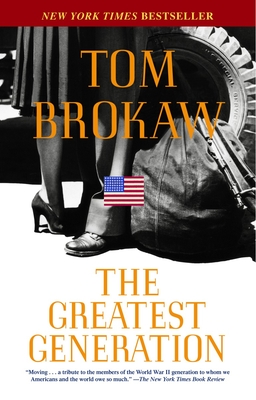
The Greatest Generation


Title:
The Greatest Generation
Author: Tom Brockaw
Genre: History/Memoir
Pages (words): 432 (96,020)
Readability: 10.1
Rating (out of 5 stars): ***1/2
Reviewed by: Ben
Description: The Greatest Generation is about the men and women who were born in the roaring 20's, grew up in the Depression 30's, fought in WWII, and then returned home to found families and begin the most prosperous period of our nation's history. Brockaw believes that this was the greatest generation of Americans ever. Brockaw tells the story of a few of these men and women, mostly focusing on the war and the years afterward.
Thoughts: I really enjoyed the stories of these men and women, how they survived the war, and what they did after returning home to try to forget the past and make up for lost time. While Brockaw is obviously making a huge generalization by claiming that the men and women who lived through WWII were the greatest generation of Americans ever, it's hard to refute his claim. Doesn't it seem like we've lost something since then? Maybe that something is a sense of duty and responsibility, or maybe it's a sense of unity. I'm not sure, but I wish we had it back. It was surprisingly refreshing to hear about the stories of heroism as well as the people (both on the home front and abroad) who just quietly did their jobs. Perhaps it takes a calamity as large as WWII to force a nation to come together like that, or perhaps Brockaw and the rest of us are looking back through history with rose-colored glasses. Whatever the case may be, I really enjoyed reading these stories and learning from the brave people who have gone before me.
Disclaimer: There are a few "war" words, but nothing serious. Also, I listened to the audio version of this book, which is unfortunately abridged down to just 3 CDs, so there is a large chunk that I haven't read.

Nudge


Title:
Nudge: Improving Decisions About Health, Wealth, and Happiness
Authors: Richard Thaler & Cass Sunstein
Genre: Popular Economics
Pages (words): 320 (N/A)
Readability: N/A
Rating (out of 5 stars): ****
Reviewed by: Ben
Description: Thaler and Sunstein begin by laying out a few basic principles of behavioral economics: (1) the power of a default option, (2) the limited cognitive powers of humans, (3) and loss aversion (we hate losses more than we love gains). They then show how these three ideas can lead people to make bad decisions, sometimes very bad ones, and how government and businesses can apply simple "nudges" to push people in better directions. They call this idea "libertarian paternalism," with the idea being that we can preserve freedom of choice, but frame people's choices in a way that are more likely to lead them to better decisions. They then show how to apply this idea to a whole range of issues, including saving for retirement, health care, marriage, mortgages, and credit cards.
Thoughts: I've read several popular science books (Blink, Freakonomics, and The Tipping Point), but this is my favorite to date, hands down. I had a behavioral economics course last year, so I had actually already heard about all of the concepts in the book previously (they are very cool ideas, so I didn't mind reading them again), but the applications that they recommend are just incredibly useful. Here's an example: They found that just by switching the default option on retirement savings so that an employee has to opt out of the company plan rather than opt in results in hugely increased participation rates. I don't remember the exact numbers, but it was something like jumping from 45% to nearly 90%. They go through example after example of this type of situation, showing how simply changing the environment of the decision-maker slightly can helpfully nudge the person towards making much better decisions. I think everyone should read this book, especially Congress. Actually, Sunstein is in the White House now, and I believe that a few of these ideas are actually being pushed by Obama. We can only hope.
Disclaimer: None.